After 2009, China has won the championship in global sales successively, and the share of its own brands has stabilized at more than 40%. China has become a truly big automobile country.
But we must be clear-headed to realize that we are far from being a powerful automotive country. Our position as the largest automobile country is almost based on the monopoly of the core automotive parts industry chain by foreign-funded enterprises.
The survival status of China's spare parts industry chain is much more severe than that of 40% of its own brand cars.
Automobile is the crown of civil industrial products. Usually, the number of automotive parts assembled in the main engine factory alone exceeds 1500, while the total number of all parts exceeds 20,000. During the automobile's life cycle of about 10 years, it needs to experience wind, frost, rain and snow, hot summer and extremely cold winter. To some extent, the quality of automobile parts determines the reliability and stability of the whole life cycle quality of automobile. No industry is so dependent on its industrial chain.
Generally, the parts of a car can be divided into the following parts:
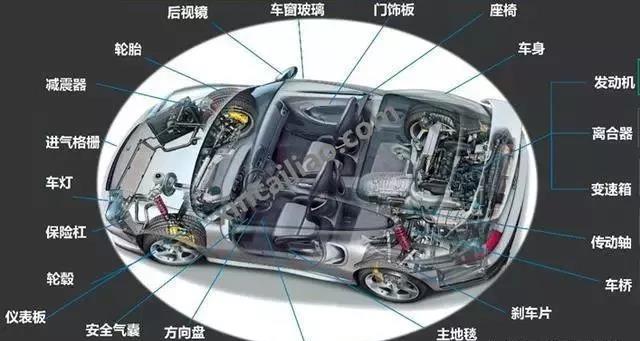
The exterior decoration can be divided into front and rear bumper assemblies. The interior part can be divided into carpet, top interior, door panel, etc. Lighting: front and rear headlights, reading lights, etc. Chassis system: front and rear axle assembly, transmission shaft, hub, brake system, fuel system, etc. Walking system: tyres.
Other functional parts: front and rear glass, door glass, skylight system, air bag, electrical system, etc.
The output value of automobile industry in developed countries is generally more than 1.7:1, while that in China is only 1:1. That is to say, although China is the largest automobile producer in the world, the proportion of spare parts matching is high. Many core components need to be imported from abroad, and our parts industry chain lags behind the development of our own brand automobiles. Taking 2017 as an example, the import value of automobile and its parts is the second largest category of industrial products imported by China, which is second only to integrated circuits.
The Top 100 Global Suppliers of Automotive Parts and Components in 2018 lists the 100 largest automotive parts and components enterprises in the world. The performance of each country is as follows:
Japan ranked the most, with 26; the United States ranked second, with 21; Germany ranked third, with 18; China ranked fourth, with 8.
From the number of automobile parts selected in this list, we can see that the national concentration of automobile parts is very high. The sum of Japan, the United States and Germany has reached 65 countries. The three countries are in absolute joint monopoly, and the parts of these three countries basically control the core part of the whole industrial chain.
China's automotive parts industry seems to be doing well, ranking fourth with eight on the list, including two that are not listed for reasons of declaration, as listed below are the 10 largest parts suppliers in China.
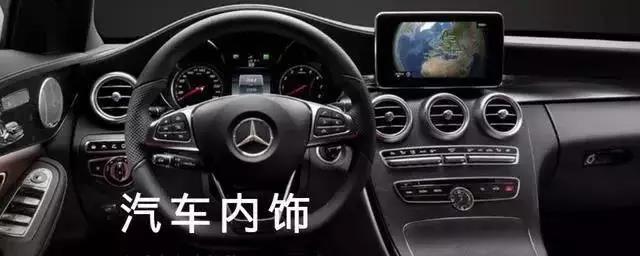
Yanfeng ranks No. 16: SAIC Group's immediate parts company, mainly produces dashboards, door interiors, bumpers, seats, steering wheels and so on.
Hainachuan (65): is a component enterprise of Beiqi Group. Its business scope is close to Yanfeng.
CITIC Deka (71): Aluminum alloy wheel manufacturer, the domestic market share will be 50%, the global market share will be about 20%.
Dechang Motor (79 bits): One of the world's largest motor manufacturers, automotive motor related parts.
Wuling Industry (80): Liuzhou Wuling subsidiary enterprises, mainly for Wuling micro-surface supply chassis, instrumentation and other related components.
Hemin Group (92): all kinds of decorative strips, seals, seat skeleton, etc.
Wanxiang Group (not listed): mainly automotive transmission system, taking into account other chassis systems.
Fuyao Glass (not listed): Automotive windshield.
These listed companies in China basically rely on the business of their parent companies, ranking generally low, focusing on non-core areas such as automotive industry chain, exterior decoration and so on.
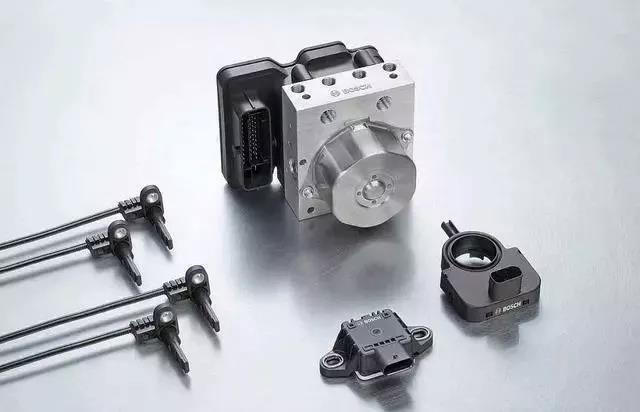
In the fields with high technology content and value, such as skylight system, airbag, chassis system, lamps, automotive electronics, ESP and braking system, engine precision parts, automotive auxiliary driving, etc., they are almost monopolized by foreign-funded enterprises, and the market share of Chinese enterprises is less than 10%.
According to the data provided in the report of China Automotive Parts Industry Development Achievement and Current Situation Analysis in 2018, the average profit margin of foreign-funded and joint ventures in domestic automobile parts industry is about 10% to 15%, while the profit margin of independent enterprises is mostly between 2% and 3%.
It can be said that China has collapsed in the industrial chain of core components.
Whenever an independent brand has a certain heavyweight model on the market, it will boast about what brand-name accessories it uses on its model, and supply chain with those luxury brands. It may be a bright spot for consumers, but it is embarrassing for automobile practitioners.
Take a Geely model as an example, to see where the key propaganda configuration comes from:
Matrix LED headlights are Farreo's (France); tyres are Goodyear's (USA); stereos are BOSE's (USA); engines are Volvo's (acquired by Geely); gearboxes are Aixin's (Japan); and the key promotional ICC intelligent driving, APA automatic parking and L2 driving assistant system, ESP are all from Bo. World (Germany). We can see that none of the core configurations as highlights are domestic.
The same situation, such as Roewe Marvel X, Changan CS55, Geely Boli GE and so on, was blown up by the main engine factory, the L2 level automatic driving system, also came from BOSCH.
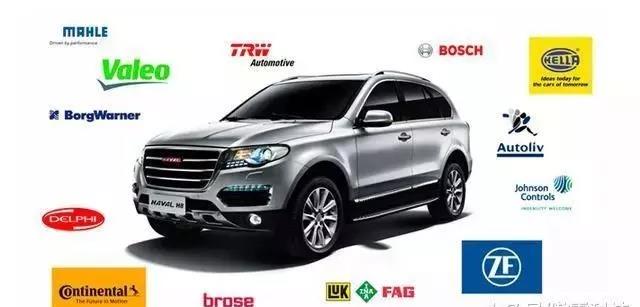
The Great Wall Harvard, its proud self-developed 1.5T engine, its main precision parts, engine electronic control management and so on are from Schaeffler, Delphi and other foreign-funded enterprises.
If we say that automobile machinery, electronic control and other fields are the accumulation of technology developed by foreign capital in the past 100 years, but in the most popular auxiliary driving and intelligent driving systems, they are also the foreign capital market. Whether they are independent traditional automobile enterprises or new force automobile manufacturers, these systems are basically from foreign suppliers. Besides providing integrated solutions, they also provide vehicle calibration. In the field of driverless chips, foreign investment is in a monopoly position.
Based on the industrial chain dominated by foreign capital, the development of an independent automobile brand takes only five years. However, the establishment of its own core industry chain of components, not overnight, overnight, requires a long-term accumulation and preparation.
However, only by establishing a truly competitive automotive core parts industry chain can we be called a powerful automotive country and realize the high-end of China's manufacturing industry.
It is hoped that while China has made breakthroughs in its own brand development and development, it will be more calm and down-to-earth in the key technologies of core components and make some achievements.
It is hoped that in a few years, when Chinese automobile brands are sold all over the world, the blood of Chinese enterprises will flow in the cars.